Why Most HubSpot-to-Salesforce Migrations Fail Before the First Import Runs
Pre-migration data remediation determines success more than the technical transfer work itself.
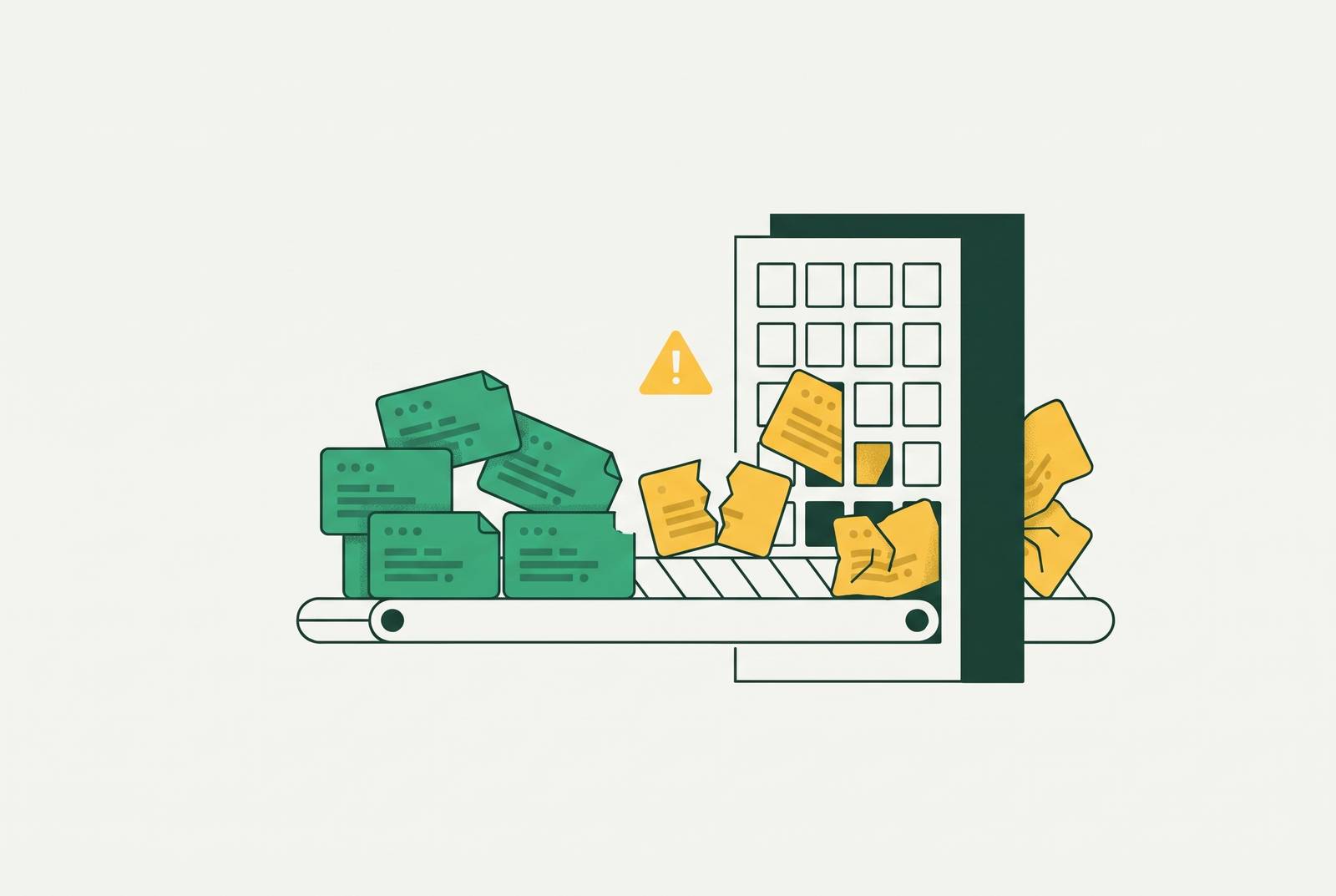
A HubSpot-to-Salesforce migration fails before the first import when a team treats degraded source data as a transport problem. The decisive work is pre-migration remediation. Duplicates, missing relationships, ambiguous record types, and fragmented histories must be resolved before they enter Salesforce, where they compromise the reporting, adoption, and automation the migration was meant to improve.
Why HubSpot-to-Salesforce migrations fail before anyone runs an import
The misdiagnosis begins when a team budgets for field mapping and record transfer before assessing whether its HubSpot data can support the destination model. Even when an import succeeds, the identities, relationships, and histories in its records can be wrong, so Salesforce has the records but cannot run the business logic as intended.
CUBE84's 2026 migration roadmap describes duplicates, broken relationships, and siloed activity histories as “the primary reason for project failure.” That framing shifts the work from export-import execution to data engineering. Achieva AI's 2026 migration guide identifies object model mapping and automation re-architecture as the highest-risk planning steps, but both depend on intelligible source data. When that dependency goes unexamined, teams discover midway through delivery that remediation should have preceded migration, after the schedule, budget, and stakeholder confidence have already been committed.
The baseline state of a HubSpot instance before migration begins
The team expects a few bad records, but the audit finds problems across the dataset. Test records sit among real contacts, company names vary, required fields have null values, and company information is out of date. Missing email addresses and invalid formatting are not confined to a small cleanup queue. The same source system can have these problems at once. A record can therefore need more than a corrected field before anyone can decide where it belongs in Salesforce.
Some of that degradation comes from ordinary sales pressure. Reps enter fake phone numbers, personal email addresses, or generic company names because a required field accepts any value regardless of accuracy. The record meets the entry requirement but has little information that can help match or route it later. Completion and accuracy are different tests. A migration plan that trusts fields because they are filled in treats data that the interface accepts as customer data the business can use.
That distinction explains why formal audits routinely find materially worse data quality than teams expect. The working CRM can tolerate defects that become unavoidable when each record needs a destination, an association, and a conversion rule. Before migration, those defects may be spread across the team's daily workflows. During mapping, they converge into decisions the project cannot postpone. The inherited dataset is therefore not simply an export awaiting transfer, but a set of unresolved questions about identity, ownership, and history.
How HubSpot's flat data model creates structural rot that Salesforce cannot absorb
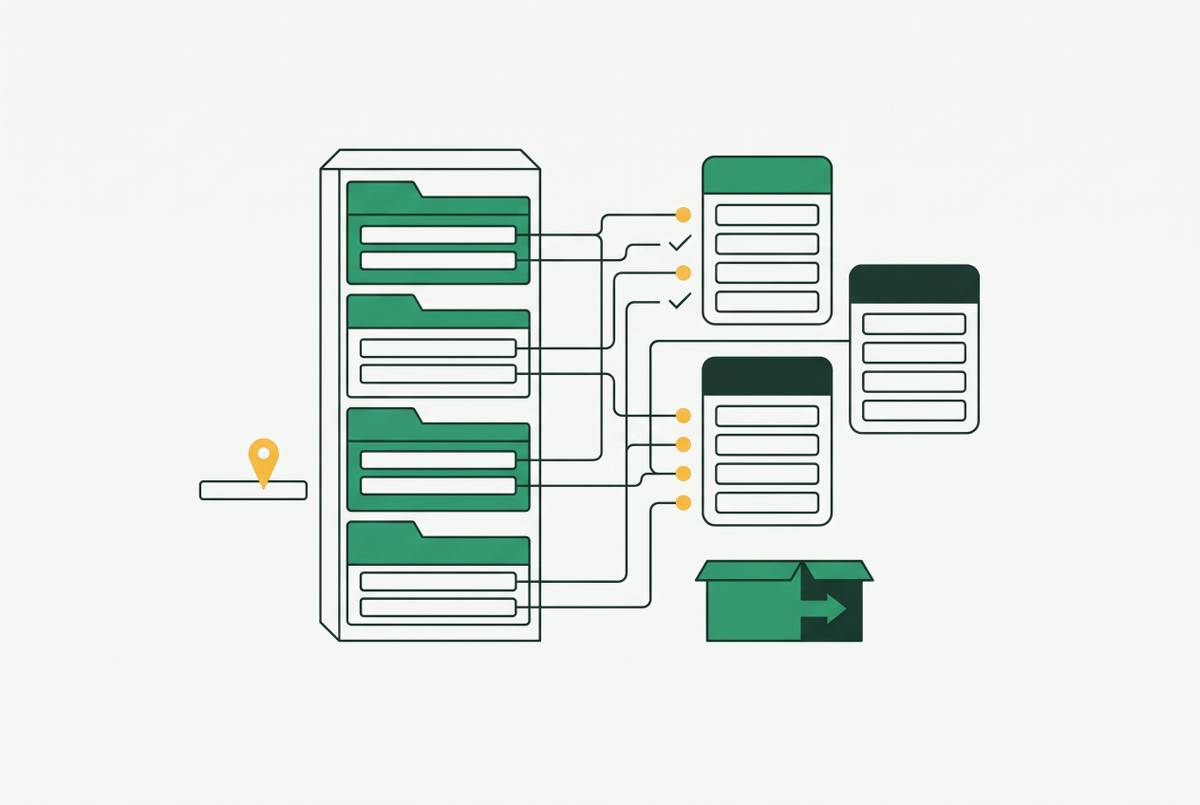
HubSpot stores people primarily as Contacts, using Lifecycle Stage and an optional Lead sub-object to distinguish prospects. Salesforce requires an explicit structural separation into leads and contacts, based on conversion logic defined before records move. If source records have information that conflicts or is missing, the migration team cannot trust it to tell leads from contacts. CUBE84 calls this the “HubSpot flat-file trap,” in which migration without a relational mapping protocol produces flattened data that undermines Salesforce reporting.
Relationships impose a second constraint on the transfer. Companies must be imported before contacts, and contacts before deals, because each dependent record needs its associations to resolve at import time. The order is not a scheduling preference. Unresolved associations produce orphaned records that are nearly impossible to reconstruct after go-live. Existing missing associations and inconsistent company names make this harder, because correct sequencing cannot repair a relationship the source data never established clearly.
Salesforce's help article states that 15-character record IDs are case-sensitive, while the 18-character API form can be compared safely by case-insensitive applications. A spreadsheet lookup function treats those 15-character IDs as case-agnostic by default, so distinct IDs that differ only by case can resolve to the same record. The row count can still look correct. What has collapsed is the distinction between records, which a count alone does not test.
Email histories, call logs, and meeting records require specialized handling to survive the move between platforms, while campaign member records disappear if they are not migrated as timeline events. CUBE84 identifies preserving “Activity History,” including email opens, meeting notes, and website clicks, as the modern standard. These structural differences are manageable in isolation. When duplicates, missing associations, and inconsistent names are already present, however, the mapping inputs become ambiguous before the transfer begins.
Why skipping the data audit extends the project by more than the audit would have taken
Skipping the audit moves discovery into a phase where the team has already built plans around untested assumptions. A project can start destination field mapping and discover six weeks later that its source data contained visible problems on day one. The delay includes both remediation and reconsidering decisions made against that data. The audit protects the timeline by exposing those dependencies before they become rework.
A focused audit has a defined scope. It covers duplicate rate, contact-to-account association completeness, custom field population, and custom object inventory rather than attempting an open-ended overhaul of data governance. That boundary distinguishes readiness assessment from a multi-month program. Organizations that audit before migrating complete the overall project materially faster than those that discover problems during the move.
Commercial pressure can still make that sequence difficult. Go-live dates are often set before data quality is assessed, leaving the audit framed as an addition to an already approved schedule. But post-launch remediation happens in a live environment where new records and activities arrive daily. The work must account for both the fixed inherited dataset and the data accumulating while defects are being diagnosed and repaired, which is the condition that expands timelines and budgets.
The three data quality failures that surface only after go-live — and what they destroy
The loss of revenue attribution is visible when marketing tries to report on the periods before and after the migration date. If campaign member records were not migrated as timeline events, often because that work was descoped to reduce cost, the CMO cannot produce a marketing-sourced pipeline report covering earlier closed deals. Marketing's contribution for the preceding 12 to 24 months becomes invisible. The missing history limits more than one report. Attribution models, budget justifications, and channel investment decisions all depend on the historical record that the migration failed to preserve.
Sales teams open Salesforce, cannot find what they need, and return to HubSpot. Some activities then enter the old system while others enter the new one, so the destination starts accumulating incomplete history immediately. This is not just resistance to a new interface. Achieva AI identifies user adoption as a major cause of CRM failure and specifies that the adoption program must be planned during migration.
Without go-live criteria defined before cutover, a team agrees to use both systems “for a month,” which extends to three, then six. Both systems accumulate data and licensing costs. Salesforce never becomes the authoritative record it was intended to be, while cleanup remains entangled with continued use of HubSpot. The longer that arrangement lasts, the more information the team must reconcile across the two environments.
Reps spend time chasing misrouted leads, marketing spends money reaching contacts who never receive the message, and leadership receives pipeline reports it cannot trust. The damage also extends beyond human users. CUBE84 describes activity history that is kept as fuel for downstream AI and analytics. When the migration loses or fragments that context, those systems inherit the same gaps that obstruct attribution and sales work.
What a pre-migration remediation project actually looks like in practice
The practical response is to scope remediation as part of delivery, with its own sequence and completion requirements. The order is audit first, clean second, and migrate third. Cleaning after migration is structurally harder because the destination is already receiving new data. The audit must therefore establish both the defects in existing records and the dependencies that could reproduce them. Active automation dependencies belong in that assessment with the data itself.
The audit covers duplicate rates across contacts and companies, contact-to-account association completeness, and custom field population rates. It also examines invalid or placeholder values, orphaned records without company assignments, custom object inventory, and active automation dependencies. Each dimension addresses a different migration decision. Missing company assignments obstruct relationships, while sparsely populated custom fields expose how little source information may exist for a planned mapping.
The cleaning phase then resolves those defects before transfer. It includes deduplication on email address, company domain, and phone number, resolution of orphaned contacts, standardization of company naming, and validation of required fields. Test records are purged before transfer. Inactive records with little history worth keeping are archived and left out of the migration, so extra records stay apart from history needed downstream. CUBE84 describes its “Data Carwash” step as scrubbing duplicates before they touch Salesforce, a prerequisite for a “clean-start” approach with governed validation targeting full record accuracy.
Remediation does not end when the import completes. Post-migration monitoring belongs inside the project because the cost of repair rises as new data accumulates and the systems diverge. Issues caught at day 7 cost hours, while the same issues caught at day 45 cost days. Early detection limits the repair scope. Waiting for a quarterly audit allows defects to persist through the reporting and operational work that depends on those records.
Continuous, autonomous monitoring keeps that protection in place after the launch period. It detects duplicates, missing fields, and inconsistencies as they emerge. Agentic data reliability platforms help by finding problems and proposing or applying fixes without waiting for a person to triage them. Their role extends beyond the transfer itself. They address the ongoing accumulation of defects that would otherwise return the new CRM to the condition of the old one.
Migration as a test of DataOps maturity, not a one-time project
The source defects exposed during migration were already detectable. Duplicates, missing associations, fabricated field values, and test records did not originate in Salesforce or appear because an import ran. Their persistence reveals a gap in the operating model, namely the absence of continuous monitoring that could have surfaced them earlier. Migration concentrates that gap into a delivery problem. It forces the organization to decide whether it will repair a dataset once or build the capability to keep that dataset reliable.
Dissolving the project team at go-live leaves that decision unresolved when ongoing monitoring and remediation have not been established. Data quality then regresses to its pre-migration state within months because the conditions that produced the original defects remain. A clean import cannot prevent that recurrence. Achieva AI describes go-live as “month zero of a multi-year capability arc,” placing the launch at the beginning of the operating model.
A model that lasts pairs continuous detection with fixes that it proposes and applies on its own, making data reliability in Salesforce an ongoing duty. Agentic platforms are designed to close that gap before defects corrupt downstream models. This changes the standard for migration success. The organization must keep records it can trust as activity grows, as well as show that it moved them successfully on cutover day.