Lightweight Assertions for Ad Hoc Python Analysis
Assertions catch data problems before exploratory results become unreliable input.
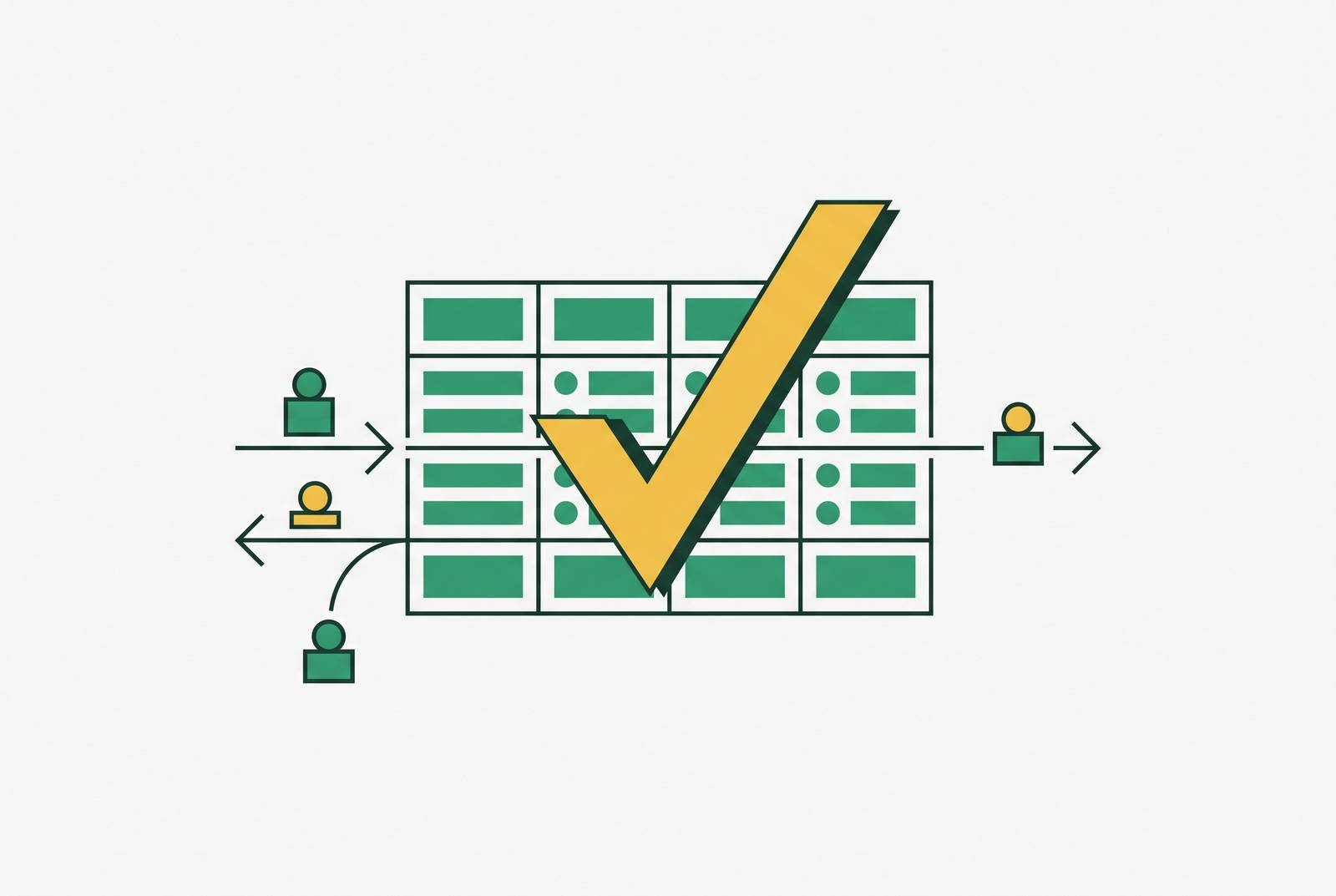
Lightweight Python assertions give ad hoc analysis its simplest layer of data reliability. The central practice is to sandwich cleaning and transformation logic between checks on incoming data and checks on the finished output. This small step shows where assumptions fail before someone else uses an exploratory result as input.
Why ad hoc Python scripts are where data assumptions go unchecked
Ad hoc Python analysis feels fast, flexible, and powerful because the method can change with the question. Unlike scheduled reporting, exploratory work starts with a broad question and takes shape as findings come in. Goals shift, transformations accumulate, and reproducibility can give way to speed. Yet the same freedom leaves validation unenforced. Nothing in the notebook requires an analyst to test an assumption before building on it.
A numeric column arrives as text, duplicate IDs inflate an aggregate, or null join keys undermine a merge. A stale snapshot can also produce a plausible metric for the wrong period. The script may keep running through any of these problems. Successful execution therefore says less than it appears to say, because the code can finish while the data violates the conditions that make the result meaningful.
This is a specific weakness of improvisational analysis. The analyst needs room to investigate without first constructing a production validation system. What is missing is a lightweight checkpoint between receiving data and trusting it. Assertions fill that gap by turning assumptions that would otherwise remain implicit into conditions the script must satisfy.
How a broken assumption travels from notebook to downstream system
Once an unchecked result leaves the notebook, correcting it becomes harder than correcting the original input. An analyst’s figure may be cited in a board deck, a flawed join may define a segment, or a duplicate-inflated aggregate may seed a forecast. In each case, the downstream work depends on an assumption that was never tested. The error now has consequences beyond the calculation that introduced it. Catching it at ingestion saves having to fix every result that depends on it.
The cost multiplies because each consumer adds another use of the same flawed output. The notebook is no longer merely an isolated exploration when another person or system treats its result as reliable input. Even when a handoff succeeds, the check is still missing. Instead, it moves the point of detection farther from the data and transformation that need attention.
Automated workflows make that distance more consequential. They consume data continuously and can produce many wrong outputs before a human reviews them. The relevant boundary for the analyst is therefore the point where an exploratory result becomes available for reuse. Assertion checkpoints belong before that boundary, while the incoming data and the logic applied to it are still available for inspection.
What Python's native assert statement can and cannot do
Python’s native assert evaluates a condition and raises an AssertionError when that condition is false. In a DataFrame, the condition can express uniqueness, allowed set membership, numeric bounds, required non-null values, or a relationship between columns. For example, assert df['id'].is_unique states that every ID must be unique. A membership check using isin can also test whether values are in an allowed set. These checks give a programming assumption an executable form without adding a validation library.
The important limitation is that Python disables assertion statements when execution uses the -O optimization flag. A check written as assert is then removed from the verification path entirely. It does not become less strict or issue a warning.
That boundary determines which implementation to use. Native assertions fit conditions where a failure points to a programming error, including assumptions that break during exploratory development. For conditions that must always be checked at runtime, use explicit if statements and raise calls, or catch exceptions in a way that stops the use of invalid data. A try/except block must not turn a failed validation into permission to continue with invalid data.
For an analyst-run notebook without optimized execution, native assertions remain a fast, zero-dependency starting point. Their value lies in making assumptions visible and interrupting work when those assumptions fail. Moving a check into durable runtime logic later preserves that value. The distinction is between development checks and guaranteed enforcement.
The pre- and post-validation sandwich: how to structure assertions around cleaning logic
The repeatable pattern is pre-validation, transformation, and post-validation. Pre-validation asks whether the incoming data satisfies the conditions the transformation expects. Transformation performs the cleaning, coercion, deduplication, or joins. Post-validation checks whether that work gave the intended result.
Before cleaning begins, check the expected column names and dtypes, required join keys, ID uniqueness, and numeric ranges. Short pseudocode-style conditions make the intent explicit, including assert expected_columns_present(raw) and assert expected_dtypes(raw). A join-key condition such as assert join_keys_non_null(raw) records another prerequisite. These are assumptions about the raw input. If one fails, the input problem is visible before a later transformation makes its origin ambiguous.
The transformation block then contains the analytical work, expressed schematically as cleaned = clean_and_merge(raw). Its checks must fit what the transformation is meant to do and allow for raw fields that still need cleaning. If deduplication is the purpose of a step, its success belongs in the output checks. An ID required to be unique before a join, by contrast, is a precondition for that join.
After transformation, use conditions such as assert row_count_within_bounds(cleaned) and assert no_new_nulls(raw, cleaned). Confirm that deduplication produced the expected count change and that the output schema matches downstream expectations. Derived values also need their own valid ranges.
Where individual rows can fail several rules, a row-level function can check positive amounts, valid email format, known status values, and non-future dates together. Tagging rejected rows with named reasons makes rejection auditable. An assertion failure, however, should stop the script. The interruption is the point at which the analyst must resolve the broken assumption before releasing the result.
DataFrame-level checks that cover the failure modes assertions alone miss
A single true-or-false result is only as useful as the condition behind it. Null and uniqueness checks do not establish that a column contains the expected type. A numeric field read as text can pass both while remaining unsuitable for the intended arithmetic. Checking the dtype before calculation begins catches this type of error. If the transformation deliberately coerces types, the output also needs a check for newly introduced nulls.
Joins require attention to both inputs and the resulting DataFrame. Check for null join keys on each side and test the uniqueness assumptions on which the merge depends. Then compare the post-merge row count with the expected bounds. The input checks expose key problems, while the output check detects unexpected row loss or fan-out.
Freshness is a separate property again. A dataset may have the right schema, unique IDs, and complete fields while representing an old snapshot. Checking that its maximum timestamp falls within the expected recency window tests whether it can support a current metric. A few checks aimed at different properties catch more than repeated checks of the same property.
TDDA’s documentation offers a concrete next step beyond handwritten conditions. It describes discovering constraints from known-good data, editing them to tighten or relax the rules, and applying them to new data. Its assertDataFrameCorrect method compares an in-memory DataFrame with a reference CSV or Parquet file. Options for column subsetting, sorting before comparison, and floating-point tolerance make that comparison useful for testing expected outputs.
TDDA’s tdda.referencetest library extends unittest and pytest with assertion methods for strings, text files, Pandas and Polars DataFrames, and binary files. That provides a bridge from exploratory checks to a more structured test harness. The purpose remains the same as with a one-line assertion. State what must hold, then make a departure from that expectation visible.
When to graduate from ad hoc assertions to a structured validation layer
Lightweight assertions offer their strongest return while a script answers a one-off question under an analyst’s control. A condition such as assert df['deal_id'].is_unique expresses a precise requirement without schema registration, rule management, or test runners. A full validation layer needs that extra work. For an exploration, that overhead may be unnecessary. For infrastructure, durable enforcement becomes part of the job.
The graduation signal is a change in how the script is used. Code that runs on a schedule, is called by another system, or feeds an AI model is no longer just an analyst’s temporary workspace. When an ad hoc script becomes a recurring job, convert its assertions to explicit if/raise checks or move them into a proper test suite. The assumptions already identified during exploration become the requirements of the structured validation layer.
TDDA’s documentation shows this path by starting development with training data, then deploying to operational data while monitoring it and refining constraints. It identifies skipping development as the single most common mistake. Discovered constraints still need to be read, adapted, and validated against holdout data before deployment. The assertion habit prepares that work by making the script’s expectations explicit early, rather than leaving them to be reconstructed after promotion.
Why the assertion habit matters more as AI consumes the output of ad hoc analysis
A script that seeds a training dataset, populates a CRM field, or feeds a scoring model supplies data to a system that may act without human review of each input. A duplicate, missing value, or flawed derived field can therefore become a model input or a misfired workflow. The checkpoint before export is an opportunity to stop that progression. It is not a substitute for validating the system that receives the data.
AI-powered observability tools address another layer by detecting distributional drift in production pipelines. They do not fire on an unchecked intermediate DataFrame inside a notebook. Assertions address that intermediate state, where the analyst is still shaping the data and testing the logic. The two forms of validation are complementary because they operate at different points, with each retaining its role regardless of how advanced the other is.
The same distinction applies to platforms that monitor systems of record such as CRMs for duplicates, missing fields, and inconsistencies, then propose or apply fixes autonomously. Those capabilities address continuous production reliability. Analyst-level assertions address the assumptions made before exploratory output reaches that layer. Together, they provide defense in depth to help stop assumption errors from becoming pipeline errors, model errors, and decisions based on bad data.
Building the assert-early habit into everyday analytical workflow
A pre-validation block in the first part of every script provides a practical starting point. Its five checks establish whether expected columns are present, dtypes match expectations, join keys and required fields contain no nulls, ID columns are unique, and timestamps fall within the expected recency window. These checks describe the input contract. Running them before transformation keeps that contract separate from whatever the cleaning code later changes.
The matching post-validation block also has five checks. It tests whether the output row count remains within expected bounds, joins or coercions introduced no new nulls, deduplication reduced the count as expected, the output schema matches downstream expectations, and derived fields remain within valid ranges. These checks describe the output contract. Together, the two blocks distinguish acceptable input from successful transformation.
The pattern also maps directly to CRM and RevOps work. Duplicate rate corresponds to uniqueness, field completion to null checks, email and phone formats to regex checks, enrichment match rate to join coverage, and data recency to timestamp checks. The subject changes, but the need to state and test expectations does not. For scripts that run more than once, convert the most critical assertions to explicit if/raise blocks immediately, treating reuse as the first signal of infrastructure.
Adding these blocks takes minutes, while an unchecked result can impose correction work every time another person or system consumes it. Done well, the script states what it expects, performs its transformation, and tests what it produced. A failed condition interrupts the handoff. The lasting practice is simple, which is to check before trusting the input and check again before passing on the output.