Duplicate Record Detection Before Aggregation
Catching duplicates before aggregation prevents cascading errors across metrics.
Duplicate records are not a filing nuisance. They happen when the same real-world entity, a customer, an order, an event, gets represented as two or more distinct rows that differ just enough in keys, field values, or timestamps to slip past the systems meant to catch them. Duplicates create directional, systematic bias baked into every count, sum, and average that touches the affected table, yet most data teams treat them as a random noise problem, when in practice the error almost always points the same direction, in the same tables, for the same structural reasons.
A count that overstates the customer base by a random, unpredictable margin is a nuisance. A count that overstates it the same way every time, because the same people got loaded twice from a CRM sync, is a structural defect masquerading as a number you'd bet a forecast on. Revenue totals overstate. Churn and retention shift unevenly: some queries show retention looking better than it is, because a churned customer's duplicate record in another system still reads as active, while others show it worse depending on which record a query happens to pull. Machine learning models trained on that data learn to overweight whichever entities happen to be duplicated most, so the model's "pattern" is partly an artifact of how many times a join fanned out, not a signal about customer behavior.
Consider a straightforward query: total customers, no filters, no deduplication logic. The number comes back high, because three source systems each contributed a slightly different version of the same person. Every downstream metric, lifetime value, cost per acquisition, segment size, inherits that inflated base. Nobody has to make a second mistake for the error to spread. It propagates on its own, through every join and rollup that references the table.
The math itself is not broken. Aggregate functions summing, counting, and averaging do what they're told, applied to whatever rows land in front of them. Feeding aggregate functions duplicate rows causes them to double-count faithfully, every time, with no judgment involved. The fault sits upstream, in the data that reached the aggregation step, and that is where the fix belongs too: before the aggregation runs, not after someone notices the quarterly numbers look strange. Waiting until then means auditing a result that was never trustworthy to begin with, and no amount of downstream cleverness recovers the time lost.
Three structural patterns that reliably produce aggregation-corrupting duplicates
Most duplicate-driven corruption traces back to one of three repeating shapes, and treating them as interchangeable is the mistake. Each has a distinct root cause, and the fix that works for one does nothing for the other two.
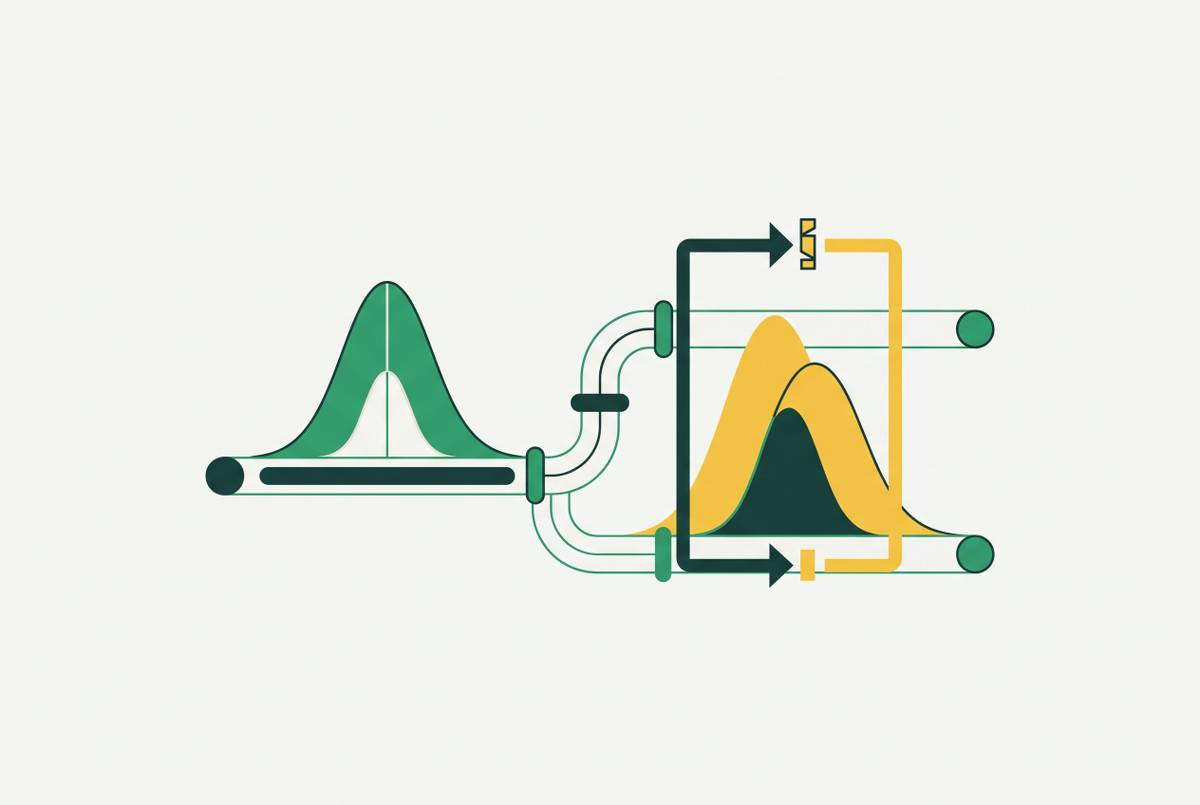
The first is pipeline reprocessing. A batch job fails partway through, and instead of checking whether the partial run actually succeeded before it died, the job simply reruns from the start. Records from the first, partially completed pass get loaded again alongside the second pass, and the pipeline reports success, because from its narrow point of view, nothing went wrong. Every aggregate downstream of that table now counts a subset of records twice. The root cause is a design flaw, not an outage: non-idempotent pipelines, where running the same transformation or load twice on the same input produces two outputs instead of one.
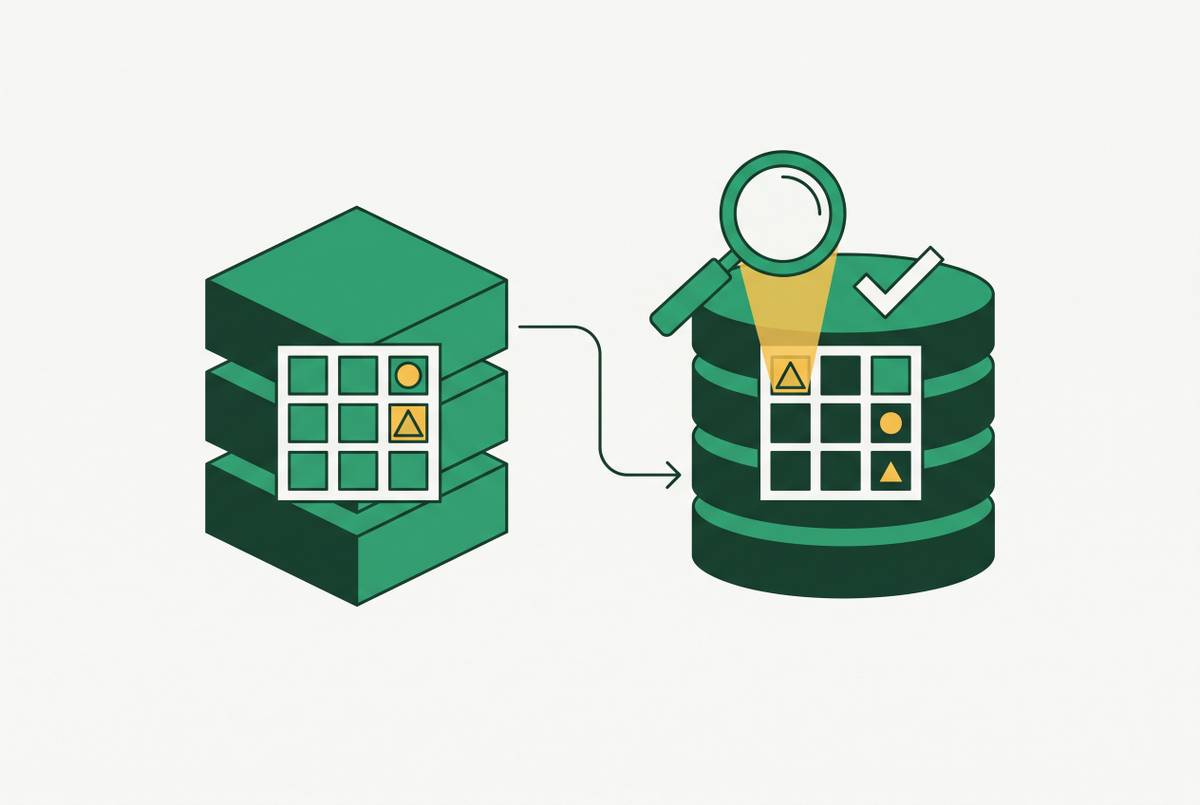
The second pattern is multi-source fan-in without deduplication, and it's the dominant failure mode in CRM and RevOps environments specifically, more damaging in practice than pipeline reprocessing because it never gets fixed at the source. Customer data arrives from a CRM, a marketing platform, and an e-commerce system, and all three land in a shared table with no reconciliation step at ingestion. The same customer now exists as three separate rows, each with different field values and timestamps, none flagged as duplicates of each other. Segment counts skew. Lifetime value calculations skew. Churn rates skew in different directions depending on which query runs and which of the three records happens to carry the most recent activity timestamp. These are systems of record built independently, by different teams, on different schedules, and never reconciled to one another before landing in the same warehouse.
The third pattern occurs during schema migrations. A table gets restructured as part of a platform move, and historical records are backfilled from an archive that overlaps, at least partially, with records already migrated from the live system. Duplicate event records with slightly different timestamps sit quietly in the table, contributing to aggregates that grow less accurate the longer they go unnoticed.
What ties all three together is silence. None of these patterns throw an error. The pipeline reports success in each case, and the corruption spreads into every downstream metric well before anyone has a reason to look for it.
What undetected duplicates cost, and how often they go undetected
Gartner puts the average annual cost of bad data at $12 to $15 million per organization, and that figure likely understates the real damage, since a large share of the cost never appears on a ledger: hours spent by analysts working around data they don't trust, forecasts quietly padded to account for known inflation in the base numbers, decisions delayed while someone tries to reconcile two conflicting totals.
That average also flattens the cases where damage compounds hardest. An organization feeding duplicate-laden data into an AI model, a revenue forecast, or a quota-setting process pays compounding interest on bad data, because a bad input doesn't just distort a report someone reads once. It distorts decisions that get made downstream, repeated, and built on top of, so the error at month one is smaller than the error at month twelve, by construction.
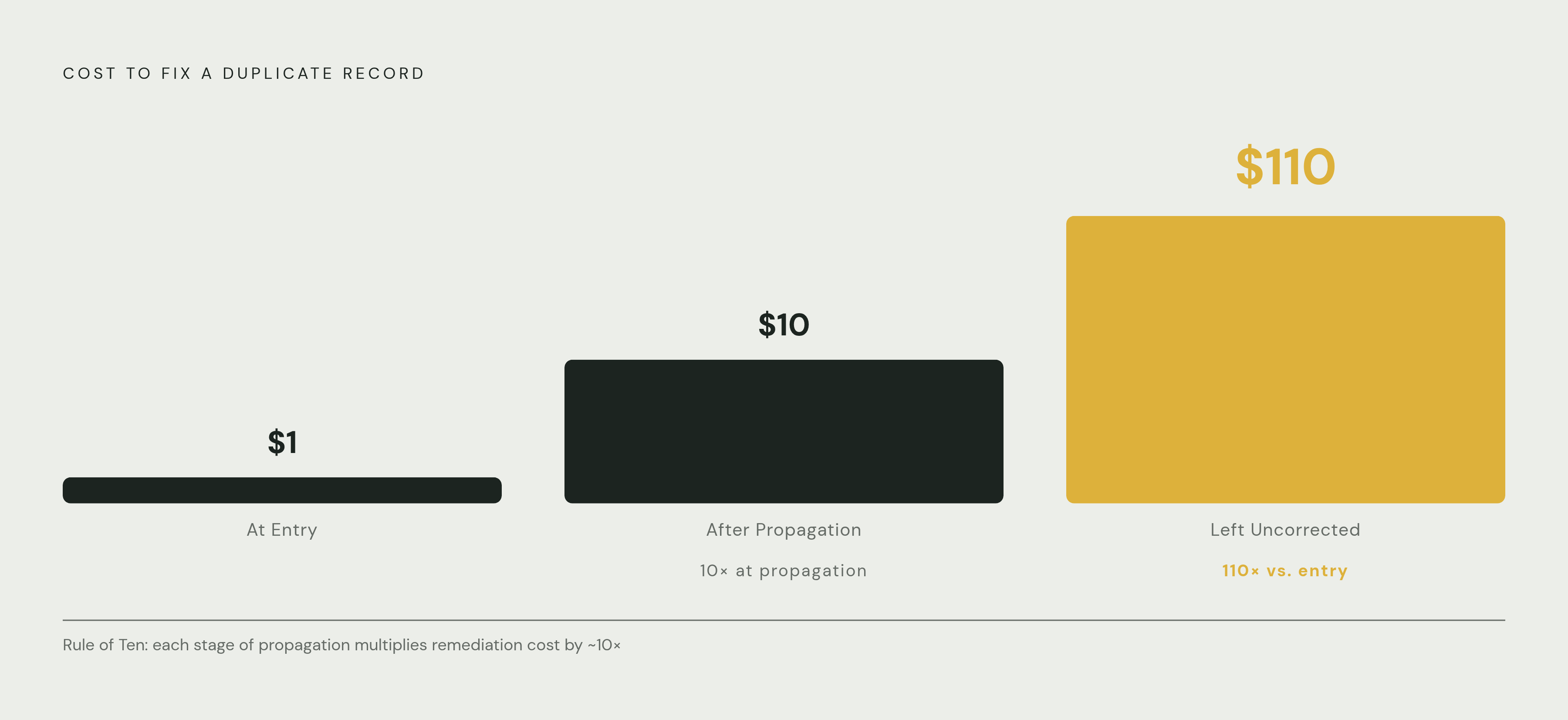
The cost-to-fix asymmetry is the clearest way to see the consequence of timing versus tooling, and it argues against nearly every "we'll clean it up later" instinct a data team has. Verifying a record at the point of entry costs roughly $1. Cleaning that same record after it has already propagated into other systems costs closer to $10. Leaving it uncorrected, letting it sit and quietly generate bad decisions, runs closer to $110 in wasted operational expense. That escalating cost pattern is the entire argument for catching duplicates early, stated in dollars instead of architecture diagrams, and it is why "detect it downstream" is not a neutral tradeoff so much as a tenfold or hundredfold tax elected in advance.
The origins of duplicates and why they are hard to catch before they compound
The single largest source of duplicate records is the most mundane one imaginable, and it has nothing to do with bad actors or sloppy engineering. Industry estimates put the share of duplicates created during initial registration or data entry at 92%, when overworked staff, facing a customer on the phone or a form that needs processing right now, create a new record instead of taking the time to search for an existing one. That's the predictable outcome of a workflow that rewards speed over search, not carelessness in any dramatic sense, and no amount of employee training fixes a workflow built to reward the wrong thing.
These duplicates rarely share an exact key, which is precisely what makes them hard to catch. Transcription errors, incomplete fields, inconsistent formatting, cultural naming conventions: all of it means deterministic, exact-match logic fails on a meaningful share of real duplicates. A single person's name becomes one nickname in one system and a different nickname in another. A middle name gets dropped somewhere along the way. A phone number gets entered with different formatting depending on who typed it in. None of these are the same string, so any system relying purely on string equality misses them, even though a human glancing at both records would recognize the match instantly.
System integration doesn't introduce a new problem so much as multiply the one that already exists, and this is the point most postmortems miss when they blame the integration itself. Poor integration and loose management of unique identifiers act as a multiplier on whatever duplication rate already exists at the point of entry. A duplicate rate that looks trivial, say 1% at the source, can balloon into something much larger once that data gets ingested from multiple systems and stitched together without a common identifier strategy. The integration didn't create the duplicates. It just gave a small, tolerable error room to compound.
Detection methods, from exact matching to semantic and AI-powered approaches
Effective detection draws on three complementary signal types; picking just one is the mistake teams make constantly, usually because exact matching is the cheapest to implement and looks sufficient until CRM fan-in inflates duplicate counts, which becomes visible when the same customer record splits across integrated systems. None of the three is sufficient alone.
Exact matching, comparing email addresses, system IDs, or composite keys directly, is fast, cheap, and precise when it works. It only catches the fraction of duplicates that happen to share identical fields, though, which, given the entry-level error patterns described above, is a shrinking share of the real problem. Relying on it as a primary defense is close to relying on a smoke detector that only triggers for one specific brand of fire.
Syntactic similarity closes some of that gap. Edit-distance algorithms like Levenshtein, or phonetic matching approaches like Soundex, catch name variations, typos, and abbreviations that exact matching misses. This layer is built to recognize that "Jon Smith" and "John Smith" are very likely the same person, even though the strings don't match.
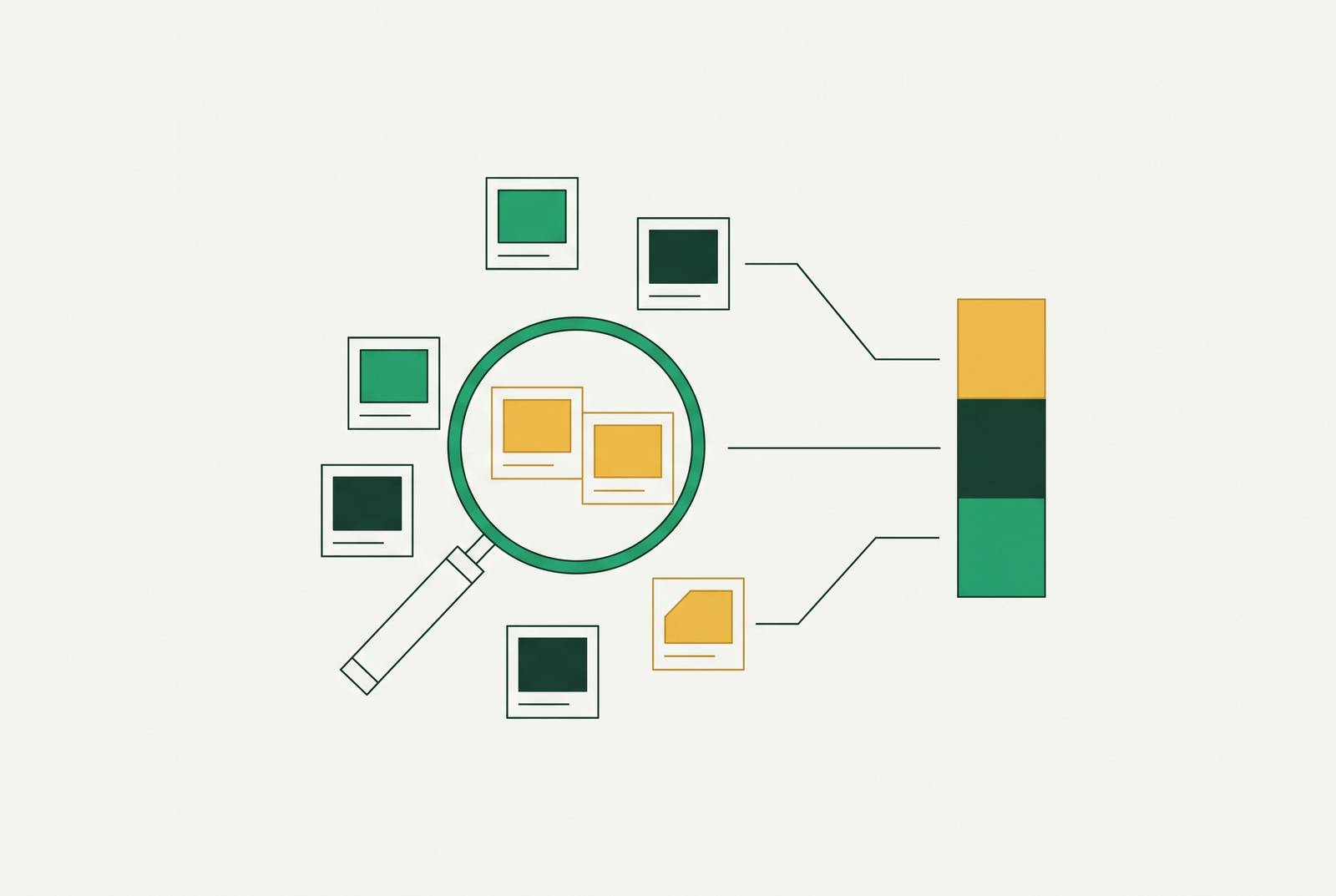
Semantic embedding similarity goes further still. Using large language model embeddings to represent the full context of a record makes it possible to catch cases where individual fields differ in representation but clearly refer to the same underlying entity. Cross-system fan-in scenarios matter most here, where three different systems have recorded the same customer with different formatting conventions and no shared ID, and no amount of edit-distance tuning solves that on its own.
A widely cited survey by Elmagarmid, Ipeirotis, and Verykios in IEEE Transactions on Knowledge and Data Engineering documented this limitation of exact matching years ago: duplicate records frequently lack a common key and often contain errors that make matching difficult by design, not by accident. That's a structural property of real-world data, not an edge case to handle later.
Scale is the obvious next challenge. Comparing every record against every other record grows quadratically as the dataset grows, which gets expensive fast. A SIGMOD paper, "In-context Clustering-based Entity Resolution with Large Language Models: A Design Space Exploration" (arXiv 2506.02509), notes that pairwise comparison methods are costly in time and money on large datasets, and found that clustering records together, rather than comparing every pair individually, cut the number of API calls required by several times over at comparable monetary cost. That's a real path forward for anyone trying to run this kind of detection at production scale.
Where deduplication lives in the data pipeline and what running "before aggregation" means in practice
The layered architecture common to dbt and Snowflake deployments makes the sequencing explicit, and skipping the sequence is where most teams go wrong. Deduplication belongs in staging, full stop, not "wherever convenient" and not in the mart layer as an afterthought.
The staging layer handles basic cleaning: renaming columns, casting types, and, critically, deduplicating. Transformations at this layer stay idempotent on purpose, and no aggregation or enrichment happens here. The mart layer comes after. Tables like dim_customers or fct_orders, the clean, aggregated data business users actually query, only get built once staging has already resolved duplicates. Building a table like that directly from raw, unstaged data causes the aggregation to inherit whatever duplication exists in the source, and there's no downstream fix that recovers from that starting point.
Idempotency is the technical backbone here. Setting a unique key at the top of an incremental dbt model prevents duplicates from accumulating every time the model reruns, which addresses the pipeline-reprocessing failure pattern directly. Insert-only logic, where every run simply appends new rows regardless of what already exists, is the technical root of that failure mode. Upsert logic, where a rerun on the same input produces the same output instead of a doubled one, closes it, and any team still running insert-only loads on incremental models is choosing to reproduce the failure on a schedule.
Any pipeline that ingests from multiple sources into a shared table needs a deduplication step before any GROUP BY, COUNT DISTINCT, SUM, or JOIN that produces a metric someone will act on. That's the minimum bar for trusting the output at all, not an optional hardening step reserved for mature data teams with time to spare.
Monitoring for duplicates continuously, not just at load time
Traditional rule-based data quality checks tend to run at a fixed point, usually right after a load completes, and they catch known problems well within that narrow window. They miss duplication introduced later: retries skip checking whether a record was already processed, backfills overlap with data already present, and late-arriving records appear after the initial load has already passed its checks and moved on. A check that only runs at load time is, by definition, blind to everything that happens after load time, which is most of a table's life.
Retries and backfills deserve particular attention, because they generate redundant data on a recurring basis rather than posing a one-time risk. Any operation that reprocesses a window of data without confirming what's already loaded is a candidate for creating duplicates continuously, quietly, in the background, long after the original pipeline was declared healthy.
Several data observability platforms exist specifically to close this gap, watching tables continuously instead of only at load time. Tools with ML-driven anomaly detection, column-level auto-monitoring, dbt-native open-source checks, and customizable validation frameworks all serve this function in different ways. What they share is the ability to catch missing records, duplicate data, and unexpected spikes or drops in volume, the exact signals that indicate a reprocessing event or a fan-in duplication just occurred.
From alerting to autonomous detection: why agentic approaches close the gap observability tools leave open
Alerts have a limit built into what they do. They tell a team that duplicates exist. They do not resolve them, and in high-volume, fast-moving pipelines, the gap between an alert firing and a human actually triaging it can be long enough for corrupted aggregates to already have reached a dashboard, a forecast, or a model in training. An alert that fires correctly but sits in a queue for six hours has, functionally, not caught the problem in time.
That gap carries consequences well beyond a single bad report. Gartner projects that through 2026, organizations will abandon at least 60% of all AI pilots that aren't backed by AI-ready data, and the line from that projection back to unreconciled CRM and RevOps duplicate rates is direct. A model can't learn a clean pattern from a table where the same customer appears three times under three slightly different names, no matter how sophisticated the model architecture is.
The shift underway moves past reactive alerting, toward systems where AI-driven agents detect anomalies and manage the resulting issues without waiting for a person to open a ticket. That means detecting the duplicate, proposing an evidence-based merge based on the matching signals described above, and applying the fix, all without a human triaging the alert first. DataOps.live's Metis agent is a concrete example of this shift: an AI agent built into a DataOps automation platform, meant to give data engineers the accuracy and speed production-grade data delivery actually demands, instead of the delayed, manual reconciliation that alerting alone leaves behind.