Common Data Quality Failures That Derail Post-Merger Integrations
Fixing duplicate records, inconsistent definitions, and stale data prevents integration value loss.
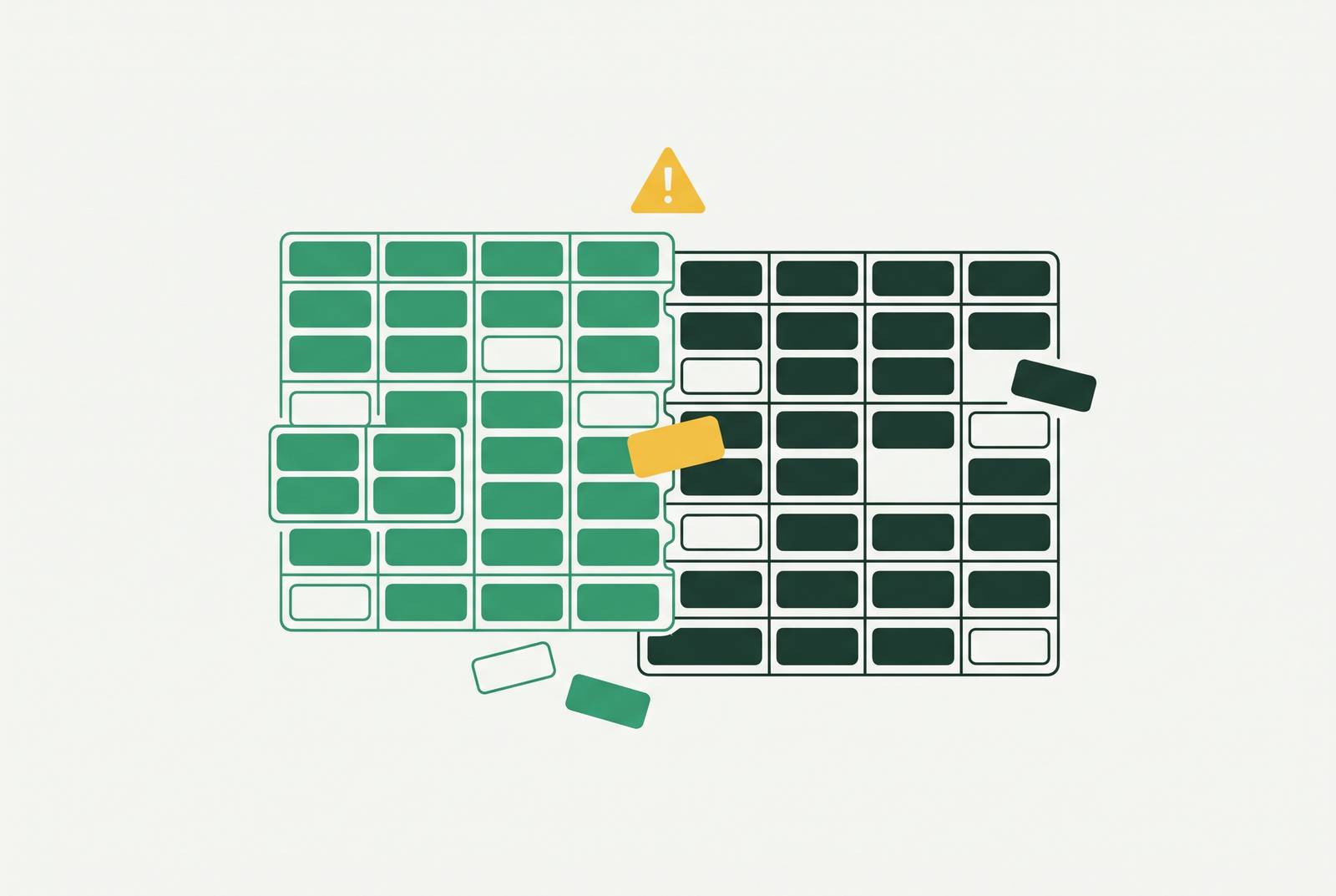
CRM data quality for M&A integration depends on fixing duplicate identities, inconsistent definitions, missing fields, and stale records before they harm the work of the combined business. These failures reveal data quality debt that has built up over time and often destroy value even when the deal’s strategy is sound. Preventing that loss requires continuous, autonomous correction in systems of record.
Why post-merger integrations fail on data, not strategy
The deal model assumes that the combined business can turn shared customers, consolidated operations, and unified reporting into value. After close, those assumptions meet the systems expected to deliver them. To earn more revenue, the businesses need to know which customers they share, while saving on operations depends on processes that work across both businesses’ environments. The gap opens at the data layer. When those systems cannot give a reliable view of the combined business, the benefits in the deal model become hard to achieve.
Culture, leadership conflicts, and strategic misfit remain familiar explanations for disappointing integrations. Yet they do not explain why billing breaks, customer views conflict, or financial reports become unreliable after systems are combined. Those failures have a more immediate cause. Integration asks operational data to support decisions and workflows beyond the environment in which it accumulated, exposing contradictions that local practices had concealed.
As M&A activity accelerates, more businesses face that exposure. Years of exceptions, special cases, and workarounds build up data quality debt in systems that may still seem good enough for daily work. Defects acquire new dependencies and wider consequences, so their impact grows disproportionately to record volume. Integration does not simply import bad data into a larger environment. It amplifies the damage that data can do.
How data quality debt accumulates invisibly before a deal closes
Operating systems are optimized for getting work done. A workaround that lets a team complete a transaction can persist without anyone reconciling it with the underlying data model. Administrative turnover then removes the context needed to interpret it. Without documentation, records become orphaned or are not kept up in the same way. The business continues operating, but its data becomes harder for anyone outside that environment to understand.
Multiple entry sources deepen the problem. Sales reps, marketing imports, and integration tools can create overlapping records when no deduplication controls are in place. Tools that write to the same system may also use logic that conflicts, causing schema drift that goes unnoticed until migration forces the differences to be resolved. Each team may get its own work done while making the shared system harder to use as a coherent whole.
One system may clone an entity to show several business relationships, while another uses separate relationship tables to show them. Both approaches can support local operations, yet a merger exposes the difference in business logic. Mapping fields cannot resolve that difference by itself. The acquired data’s accuracy, ownership, and accumulated shortcuts determine what the combined business can do, even though those properties may never have been independently tested before signing. By the time the weaknesses become visible to leadership, finance, risk, compliance, and customer operations may already depend on the merged environment.
Duplicate records and how to deduplicate customer records when merging two CRMs
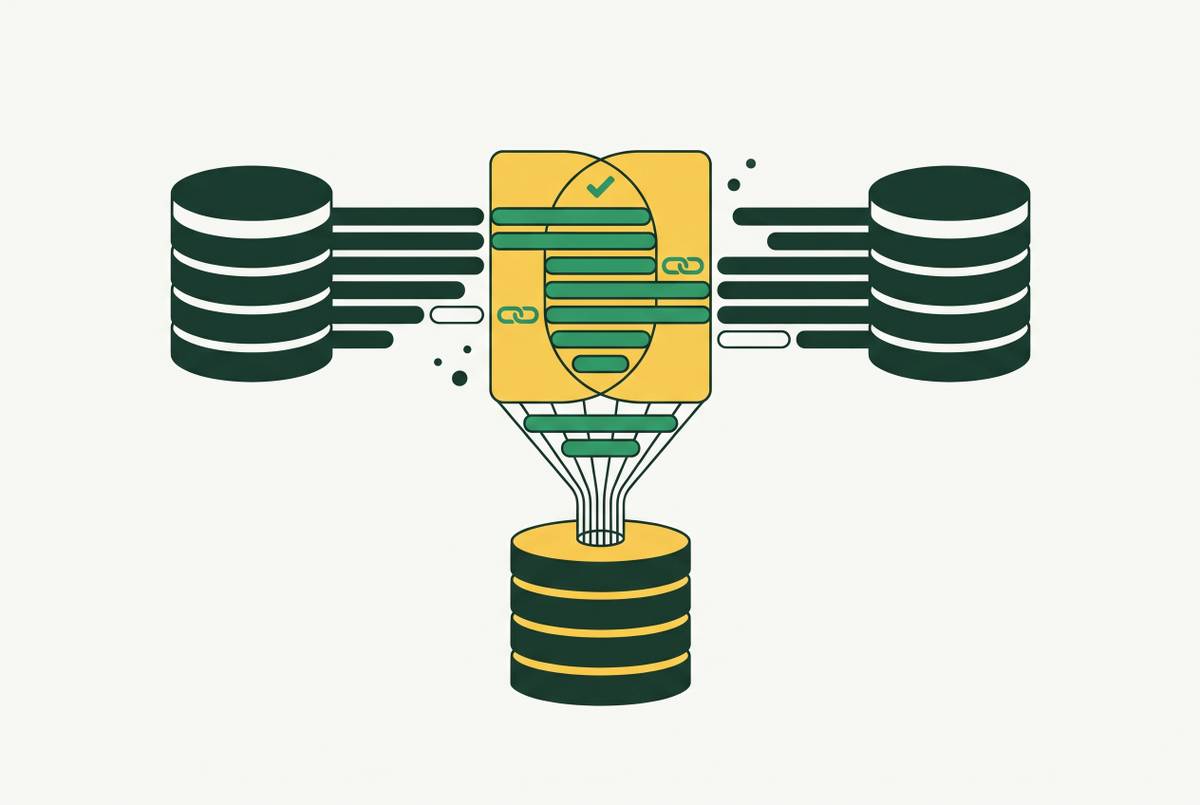
Duplicate records are the most common and immediately destructive failure because every downstream process depends on knowing which entity a record represents. Two businesses may have independently recorded the same contacts, accounts, and companies without a shared identity resolution framework. Combining their records therefore combines competing representations of the same customer. Record volume is not customer growth. Without accurate entity resolution, the acquirer can underestimate customer overlap and overstate the revenue opportunities available to the combined business.
Modgility documents a pattern in which sales reps encounter duplicate contacts with conflicting information shortly after go-live, lose trust in the CRM, and return to manual tracking. The migration may be complete on paper. In practice, the unified platform has failed to become the shared operating system because its users cannot rely on its customer records.
Deduplicating two CRMs therefore requires resolving identity. The structural remedy is an evidence-based merge that reconciles records representing the same entity, followed by continuous correction as new records enter. Otherwise, the original sources of duplication remain active, including multiple entry points, inconsistent lifecycle management, weak governance, and conflicting integration logic. A one-time cleanup leaves that recurrence mechanism intact.
Control weaknesses also need attention of their own when systems are combined. The UBS AG Annual Report 2025 says that Credit Suisse AG’s internal control over financial reporting was still ineffective as of 31 December 2023 after the acquisition and merger. That finding illustrates the narrower point that combining organizations does not itself remediate inherited control failures.
Inconsistent field definitions: how the same word means different things in two merged systems
Two systems can use the same field name while encoding different business events, making the merged data look consistent when it is not. “Closed” may mean contract signed in one CRM and payment received in another. Both records can pass a format check. Combining them into one revenue report nevertheless blends unlike events and produces a number without a consistent business meaning.
Lifecycle stages create a similar problem when one platform’s categories have no clean equivalent in the other. Manual crosswalks can bridge the systems temporarily, but each refresh creates another opportunity for inconsistency. Modgility describes a mid-market B2B company where lifecycle stages that did not line up and data silos across multiple platforms forced sales leaders to work out multi-year contract values by hand. Executive trust in performance reports eroded. Resource allocation meetings became contentious because participants no longer believed the numbers used to justify decisions.
This failure is subtler than duplication because the data can appear complete, current, and neatly formatted. The defect resides in its meaning. Management reporting can bring records together reliably only when their definitions agree, and normalization of format alone cannot make those definitions agree. A common label is not a common definition.
For AI, that distinction is foundational. A model trained on a field whose meaning changes with the record’s origin receives inconsistent representations of the outcome it is supposed to learn. It can then reinforce that inconsistency across predictions and automated decisions. The outputs may sound confident even when they cannot be trusted. Definitional alignment is therefore an input requirement for AI.
Missing fields and stale records: the data that was never there, and the data that stopped being true
Missing fields are quiet failures because an absent value may not look like an error. Different required-field standards allow a record to pass validation in its source system but arrive incomplete in the target. The record exists, yet it cannot support the process that now depends on it. Migration success can conceal operational incompleteness. Underwriting, billing, and reporting then encounter gaps that the source system never required anyone to fill.
Integration behavior can create those gaps even when the underlying transaction exists. Modgility documents a HubSpot-QuickBooks-CRM sync failure in which invoices did not associate with deals unless a quote was manually created first. Purchased products were consequently untrackable at the deal level, and invoice data could not trigger workflows. The missing association disabled the intended automation. This was not merely an empty field in a report, but a break between recorded activity and the process meant to act on it.
Stale records arise through a different mechanism. Their values were once accurate but become wrong between due diligence, signing, extraction, and integration go-live as contacts change roles, companies restructure, or subsidiaries shift. Completeness is whether the needed information is there, while currency is whether it still gives an accurate picture of the business. Stale KYC/AML data and missing audit trails also create regulatory exposure, extending the consequences beyond sales and operations.
Marriott’s 2016 acquisition of Starwood was followed years later by discovery of a 2014 breach in the Starwood database, with $52 million in fines from a multistate attorneys general settlement. The case concerns an inherited, unmonitored environment. Its relevance is the visibility gap. An acquirer can take on data-related risk that no one sees until the damage is done.
How these failure modes compound: the cascade from dirty data to collapsed synergies
The four failures reinforce one another because they affect different prerequisites of the same processes. Duplicates obscure identity, inconsistent definitions obscure meaning, missing fields prevent execution, and stale records detach decisions from current conditions. Fixing only one leaves the others in place. A deduplicated customer record can still contain a contradictory lifecycle stage, lack information needed for billing, and identify a contact who no longer holds the relevant role.
Duplicate customer counts distort overlap assumptions before go-to-market teams begin pursuing the modeled growth. Definitional conflicts then prevent reliable aggregation, even after identities have been reconciled. Missing fields stop the workflows expected to produce operating efficiencies, while stale values misdirect the actions that still execute.
The consequences extend into revenue leakage from mismatched accounts, delayed synergy capture, rework costs, and conflicting customer experiences. Leadership also loses a dependable basis for judging integration progress. When reporting cannot distinguish genuine performance from data defects, resource allocation becomes harder and investor confidence can suffer. The damage is both operational and psychological. Users who distrust the shared system retreat into separate tracking methods, weakening the common view the merger was meant to create.
Manual reconciliation is an understandable response, but it does not resolve the structural problem. Spreadsheets cannot handle the required volume reliably, human-led checks introduce further inconsistencies, and validation varies across integration phases. The response becomes another source of drift. AI deployed on the same uncleaned system adds a different form of amplification by encoding those errors across automated workflows. Rather than removing the original defects, automation gives them a broader reach.
Why detection alone is not enough: the case for continuous, autonomous data reliability in systems of record
The architectural response must address the recurring causes of these failures where they arise. A one-time remediation project can correct a snapshot, but new imports, conflicting integration writes, and changing business facts continue after migration. Continuous monitoring is necessary for that reason. Correction must also occur in the systems of record, because those systems supply the customer identities, business definitions, and operational values used downstream.
ETL pipelines and alerting tools serve different purposes from autonomous remediation. Even strong ETL platforms can move data and make it visible while leaving its quality defects and lineage gaps in place. An alert can identify a missing field after a workflow has failed, but the notification does not repair the record or reverse the decision. Detection is not the same as reliability. When every correction waits for human triage, the gap between discovery and action remains part of the architecture.
Automated CRM deduplication and normalization should be evaluated by the corrective work performed. For duplicates, that means progressing from identification to an evidence-based merge applied without waiting in a triage queue. For inconsistent definitions, it means addressing business meaning as well as standardizing format. Missing fields and stale records require distinct treatment because absence and obsolescence are different defects. An architecture that treats all four as generic alerts leaves their operational causes unresolved.
Agentic data reliability is the architectural response to that gap. Its purpose is continuous, autonomous monitoring and correction of the predictable failures that otherwise spread through integration workflows. The requirement extends beyond the merger itself. AI depends on the identity, meaning, completeness, and currency of the data it operates on, so deploying it over an uncleaned system accelerates accumulated debt. Reliable systems of record are the prerequisite for trustworthy AI.